
-
Overcoming Engineering Challenges: Developing a Tiny Robotically Steerable Guidewire
February 15, 2013 - 12:00PM
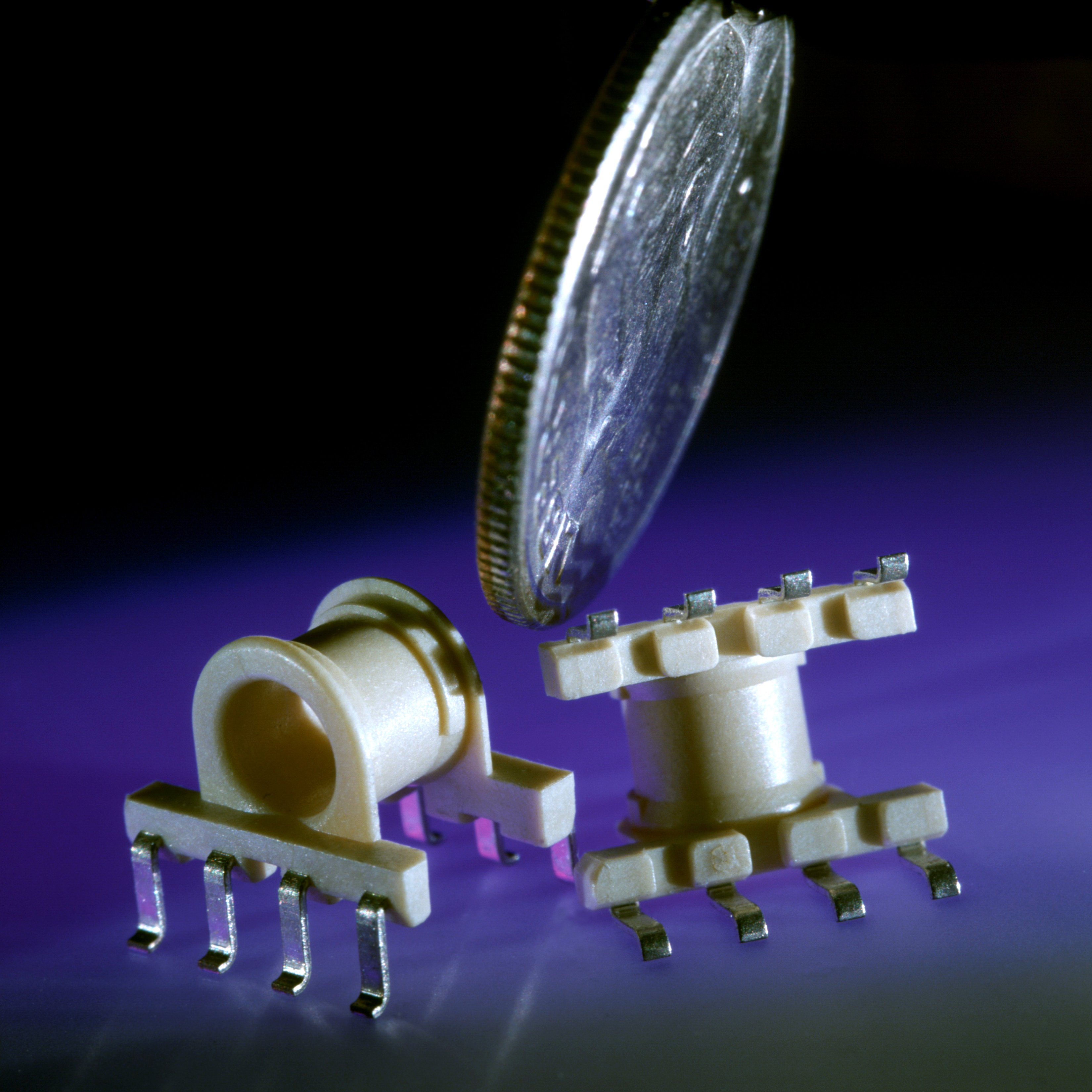
Add CommentAs a company that develops medical products that typically comprise micro-electromechanical systems (MEMS), our greatest engineering challenge is rooted in the sheer physical size of our devices. For example, our flagship product is a robotically steerable interventional guidewire with a diameter of 0.014 in. (0.36mm)—the IntelliWire. Equivalent to just two strands of human hair thick, the core of this device houses an array of electrical and mechanical components, which collectively make up a... -
Bioresorbable Materials Take Center Stage at MD&M West
February 14, 2013 - 2:04PM
At this year's MD&M West, bioresorbable and bioabsorbable materials were the focus of conference sessions and company product announcements alike. At the MedTech Innovate Seminar session on bioresorbable materials, Dennis D. Jamiolkowski, distinguished research fellow, at Ethicon Inc., Johnson & Johnson Co.; Derek Mortisen, senior scientist at Abbott Laboratories; and Mart Eenink, director, global sales biomaterials at Purac highlighted the chemical and mechanical issues involved with... -
Where Has All the Medtech Venture Capital Gone?
February 7, 2013 - 3:01PM
Venture capital (VC) funding in the biotechnology and medical device sectors fell in 2012, dropping 14% in dollars and 7% in deals. In absolute numbers, according to a new report from PricewaterhouseCoopers LLP and the National Venture Capital Association, VC investments totaled $6.6 billion in 2012, down $1.1 billion from 2011. And while 836 VC deals were struck in 2011, there were only 779 last year. But that's not all. The report's most noteworthy finding is that first-time VC funds went to... -
New Medical Materials Point the Way toward a Lead-Free Future
February 6, 2013 - 5:45PM
Some alternative, lead-free materials developed to comply with RoHS requirements can produce tin whiskers, which can cause shorts and device failures.At the MD&M West Conference on Thursday, February 14, Simin Bagheri, customer engagement lead at Celestica Inc. (Toronto, Ontario, Canada), will speak on “Materials Selection Based on the New RoHS Requirements: Selecting Alternative Lead-Free Alloys for Circuit Board Assembly.” In the following conversation with MPMN, she details some of the... -
FutureMed: the Intersection of Robotics and AI
February 5, 2013 - 7:15PM
Dan BarryA tsunami of innovation is coming to the field of robotics, explained Dan Barry, MD, PhD at FutureMed. Already, robotics are used for numerous medical applications. For instance, there is the SpineAssist, a robotic arm that enables accurate guidance during spine surgery. There is the famous da Vinci surgical robot from Intuitive Surgical as well as bedside robots. Roboticized prosthetic limbs now exist that offer functionality not found in humans, albeit without sensation. Also... -
Why Synthetic Materials Could Be the Next Disruptive Technology
February 5, 2013 - 4:13PM
“I just want to say one word to you. Just one word,” said the businessman Mr. McGuire to Dustin Hoffman’s character Benjamin in The Graduate, who had recently completed his college education. That word, of course, was “plastics” and it was offered to Benjamin as a sort of career advice: plastics are going to be big. At the time the film was released in 1967, it would have been hard to foresee just how right Mr. McGuire would be. Plastics are literally all around us. They are often within... -
FutureMed: Artificial Intelligence to Fuel Nanotech and Other Breakthroughs
February 5, 2013 - 2:47PM
“The computers are in control. We just live in their world.” That quote, attributed to supercomputer pioneer Danny Hillis in a Wired magazine article was meant to be a reflection of the world we live in now. The quote also serves as a predictor for where we are headed as the applications of artificial intelligence will expand greatly in the future. Such progress will enable medical and manufacturing breakthroughs as well as fuel leaps in human's creativity, explained Neil Jacobstein,... -
Supercapacitor Could Charge Up to 1000 Times Faster than Typical Batteries
January 31, 2013 - 6:43PM
Batteries have been getting a good deal of attention lately, thanks to the much-publicized Dreamliner problems and the possibility that lithium-ion batteries played a role in them. The Dreamliner’s troubles have spurred renewed interest in supercapacitors, which, like batteries, can store an electrical charge but can be charged or discharged much more quickly.Last year, Ric Kaner a professor of inorganic chemistry at UCLA brought significant attention to supercapacitors thanks to a short film... -
The Science and Art of Miniaturizing Diagnostic Medical Devices
January 31, 2013 - 2:31PM
Microfluidic CD system developed at the University of California, Irvine, can be used to perform medical diagnostic applications.On Wednesday, February 13, Marc Madou, Chancellor's Professor of mechanical and aerospace engineering and biomedical engineering at the University of California, Irvine, will hold a keynote presentation at the MD&M West Conference on “The Science (and Art) of Miniaturizing Medical Devices: A Closer Look at CD Technology in Molecular Diagnostics.”A subfield of... -
Mobile Medical Device Technology on Display on NBC
January 29, 2013 - 6:58PM
Famed cardiologist Eric Topol, MD demonstrated an array of digital health technologies in a segment titled “iDoctor” on NBC’s Rock Center with Brian Williams. In the segment, a number of mobile medical devices were on display (also pictured below), ranging from AliveCor's iPhone ECG to a smartphone-compatible continuous glucose monitor from Dexcom. In the clip, Topol explained how such technologies are fueling the future of healthcare by enabling better monitoring of health metrics. “The... -
Daniel Kraft on How Exponential Technologies Will Reboot Healthcare
January 28, 2013 - 11:52AM
Daniel Kraft, MD, executive director of FutureMed.“Medicine is certainly ripe for some sort of disruption,” says Daniel Kraft, MD, the Stanford and Harvard-trained executive director of FutureMed at Singularity University in Silicon Valley. The fuel for that disruption is a variety of technologies with rapid growth curves and the innovators who help leverage them to change the status quo. Artificial intelligence, 3D printing, genomics, Big Data, mobile technology, regenerative medicine, and... -
How Safe Are Lithium Ion Batteries for Medical Applications?
January 25, 2013 - 7:39PM
It is well known that lithium ion batteries can explode under certain conditions. For a visual demonstration, check out the video below (the pyrotechnics begin around 1:50 in). Lithium ion batteries also happen to be found nearly everywhere people are: in consumer electronics, in medical devices, as well as in vehicles such as hybrid cars and, more famously, the Boeing 787 Dreamliner.It is still unclear what exact role lithium ion batteries played in recent fires in 787 Dreamliners, the... -
Advanced Medical Materials to Contribute to Improved Prostheses
January 25, 2013 - 1:17PM
A team of researchers at the Georgia Institute of Technology (Georgia Tech; Atlanta) and Florida State University (Tallahassee) have been awarded a $4.4 million contract to engineer an improved prosthetic socket system to improve the lives of veteran amputees. As part of the project, the researchers will focus on developing innovative adaptive materials that are better able to handle changes in limb volume and pressure while providing active cooling and temperature control. In addition,... -
When It Comes to Nanoparticles, Size (along with Shape and Charge) Matters
January 24, 2013 - 8:00PM
Nanoparticles are among the most promising medical materials, with applications spanning imaging, diagnostics, drug delivery, and infection control. Nanoparticles, however, also have the potential to be toxic, altering cellular machinery, potentially altering gene expression and causing transgenerational damage. Their toxicity can also be used for good, however, to selectively target and destroy cancer cells.Whether a given nanoparticle is toxic or not depends largely on a few principle... -
Overcoming Engineering Challenges: Taming ‘-omics’ Data
January 23, 2013 - 8:10PM
Syapse (Palo Alto, CA), a startup trying to bring genomic data into routine clinical use, is developing a data-management platform to enable clinicians to sift through the mounds of data generated by “-omics:” genomics, proteomics, metabolomics, and transcriptomics to ultimately improve the diagnosis of a variety of potential illnesses. The end goal is, as a GigaOm article puts it, "to make mining omics data as simple for its users as Salesforce.com makes [customer relationship management] for... -
Engineering a Non-Invasive Device for Treating Headaches (Interview)
January 23, 2013 - 3:35PM
J.P. Errico, the CEO and founder of the medical device firm ElectroCore, has an interesting background. He holds a degree in aeronautical engineering from MIT and and a mechanical/materials engineering degree from Duke University. At Duke, Errico also earned a law degree and he later became a patent attorney.In an interview with MPMN, Errico shed light on the engineering process behind the development of ElectroCore’s non-invasive technology, which stimulates the cervical branches of the vagus... -
What Happens When Nanotechnology Goes 3D?
January 17, 2013 - 6:01PM
A neon pump proposed by K. Eric Drexler and Ralph Merkle in 1995. A universal joint proposed by K. Eric Drexler and Ralph Merkle in 1992. It's not surprising that many medical device applications of nanotechnology have been limited to drug delivery and implants; most applications of nanotechnology at large have been 1D or 2D—despite countless predictions of complex implantable nanobots that would travel through our blood stream à la Fantastic Voyage. In the relatively near future,... -
Medtech Industry Analyst to Perform Teardown Analysis at MD&M West
January 16, 2013 - 5:56PM
Curious about which parts are inside an Animas Ping insulin pump? The device will the subject of a live teardown at the MD&M West conference on February 12 in Anaheim, CA, which will shed insight into the inner workings of the device as well as the insulin pump market and relevant intellectual property considerations. The teardown will be performed by Bill Betten, medical technology director at UBM TechInsights, who previously has led a number of medical device product development efforts.... -
A Closer Look at Tear-Based Glucose Measurement for Diabetics
January 15, 2013 - 3:08PM
Each day, millions of diabetics across the world prick their fingers several times to check their blood glucose levels. Measuring glucose concentrations in tears may provide a noninvasive option for accomplishing the same objective, although it would likely need to be supplemented with some degree of blood measurement. “We are not suggesting that it is a replacement for blood glucose measurements. It could help in the monitoring of blood glucose by decreasing the number of blood finger pricks... -
Lab-on-a-Chip Using Lasers and Electric Fields Has Diagnostic Device Potential
January 9, 2013 - 1:05PM
Purdue University researchers have demonstrated a new technology that combines a laser and electric fields to create tiny centrifuge-like whirlpools for separating particles and microbes by size—a potential lab-on-a-chip system. Above, the technique is used to collect Shewanella oneidensis bacteria. (Image courtesy of Purdue University)Researchers at Purdue University (West Lafayette, IN) have engineered a new lab-on-a-chip device that could potentially be used in future medical diagnostic...
Latest News
Latest Resources
- VistaMed - Innovative Catheter Solutions - Video
- RTS 360 Info Sheet - Supplier Resource
- EP21LVMed - Supplier Resource
- EP42HT-2Med - Supplier Resource
- UV18Med - Supplier Resource
- LED403Med - Supplier Resource