
Qmed Webcasts

  • 8 Step Approach to Address the Multi-faceted Security Threats Targeting Medical Devices

    Medical devices, including diagnostic tablet computers, heart-rate monitors, and MRI scanners, are just as susceptible to malware as standard laptop computers. The stakes of keeping healthcare devices secure are particularly high. As the complexity of securing devices increases, so does the risk of vulnerabilities slipping past equipment manufacturers and hospital IT organizations. However, this complexity is reduced significantly when medical devices are designed for security using platforms similar to typical networked clients, such as laptops and workstations. There isn’t a single security solution capable of addressing all existing and future risks; instead, it’s necessary to implement a series of different defenses across the system. Join Intel’s Mike Taborn and Wind River’s Ken Herold as they demonstrate how to address these risks and design security for the medical market. In this webinar, attendees will learn how to:Assess current and future risks and implement a series of defenses across the system to address and protect against known and unknown risksSimplify medical device security management by incorporating standards-based platforms while offering state-of-the-art protectionDeploy safeguards throughout the platform to provide a robust protection against the vast majority of attacks

    Tue, Jun 5, 2012 - 12:00 pm

    60 minutes

  • 3 Key Areas to Reduce Costs with Lean Techniques

    For medical device manufacturers today, keeping costs in line in the face of the raging pace of change in the industry isn’t easy. Depending on your business, you might be facing new regional legislation, new compliance requirements, or are simply trying to manage high growth. Strategies deployed today in the business can have long term gains in keeping costs in check, while supporting operational requirements – wherever you plan to take your business. So the question becomes, what can I do today to lower costs in medical device manufacturing and at the same time prepare for what the future holds? Join us for this webcast and hear from Carl Heeder, Director of IT at IDEV, Technologies Inc on how they use lean automation techniques and systems to meet new requirements for process control while at the same time eliminating wasted processes in the business. Carl will focus on the 3 areas where there business has seen rapid growth recently; Sales, Procurement, and Distribution. They are using lean automated business processes specifically to:Replace manual and paper based processes with automated, leaner processesProvide sales with instant notifications and order validationMeet high standards for traceability and control of end products as well as materials and componentsSpeed time to meet new compliance requirements – especially from new geographiesManage high growth initiativesUse flexible controls to ensure qualityRegister for this webcast now and learn how your company too can reduce waste while improving compliance processes with lean techniques in the enterprise.

    Wed, May 30, 2012 - 02:00 pm

    60 minutes

  • Innovative Conformal Coating Technologies for Advanced Medical Devices

    Coatings have been utilized in the medical device industry to modify surfaces for over 30 years. Reasons for such coatings include enhancement of electrical and frictional properties, provision of chemical and moisture barrier properties, improvement of the hygienic properties of the surface, and sometimes simple enhancement of the cosmetic perception of a product. Coatings may also be used to facilitate the application of other coatings (a primer or tielayer role) and to control the extraction or release rates of compounds from within or on substrate materials.The webinar will review the variants of Parylene, their unique and highly useful attributes, their application processes and examples of how Parylenes have solved device performance and materials challenges.Parylenes ...have solved patient allergenic reactions to device materials;have allowed drug/polymer combinations to be applied to metal stents that were otherwise incompatible;have prevented galvanic interaction between dissimilar metals in cerebral vascular coiling procedures;have permitted the use of less expensive but non-biocompatible metals in surgical instruments;have enabled smaller device dimensions and tighter components packaging due to ultra-thin coatings. Parylenes are solvent, catalyst and plasticizer-free organic coatings that have an impressive array of attributes. These attributes include:excellent chemical inertness and resistancesuperior chemical, fluid, gas, moisture and electrical barrier propertiescoefficients of friction equal to or better than some PTFEstemperature performance to 450°C. Parylenes are biostable and biocompatible, having passed an array of ISO 10993 and USP Class VI biological evaluations, documentation of which can be found in FDA Drug and Device Master Files.Date: May 3, 2012 Time: 9:00 a.m. ET/14:00 London/15:00 Paris Duration: 60 minutes

    Thu, May 3, 2012 - 09:00 am

    60 Minutes

  • Stand-Alone Medical Software: Understanding Compliance

    At the end of January 2012, the European Commission published MEDDEV 2.1/6. This document is designed to provide a frame of reference for stand-alone software under the three medical device directives, which is important for compliance purposes. Many companies coming from a software background are new to medical device regulations and lack the tools for compliance. Since software that assists a medical device in its function also is regulated as a medical device, an understanding of medical device regulation is critical for vendors of software used in clinical settings. In this webcast, Erik Vollebregt, a Dutch lawyer specialised in EU legal matters related to medical devices, will discuss in detail the regulatory issues surrounding stand-alone software and explain how MEDDEV 2.1/6 helps manufacturers achieve compliance and where it may fall short. Attendees will come away from the one-hour session with a clear understanding of compliance as it relates to stand-alone software from a legal perspective.Erik Vollebregt is a founding partner of Amsterdam-based Axon Lawyers, a boutique law firm that focuses entirely on the life sciences industry. He is specialised in legal, regulatory and IP issues involving the life sciences with a focus in biotechnology and medical devices. He also maintains the medicaldeviceslegal.com blog.The one-hour webcast will include a question and answer session and will be moderated by Norbert Sparrow, Editor in Chief, EMDT and medtechinsider.Webcast Details: This pay-per-view webcast will take place on Tuesday, April 24 at 14:00 London/15:00 Paris. Attendance is €99 per person. *Please note: Credit card charges will appear in US dollars. Group rates are also available. Contact Sue Johnson for information: sue.johnson@ubm.com, +1 (310) 740-9013.

    Tue, Apr 24, 2012 - 09:00 am

    60 Minutes

  • Innovative Tubing Solutions to Reduce Costs for Single-use Disposable Instruments

    You need medical tubing. There's no getting around it. But is there a difference between the tubing from different manufacturers? And have there been any innovations recently in tubing? The answer to both questions is a resounding "Yes!"Attend this webinar to hear from the experts, and you'll learn:how innovative solutions from in-house product development teams can reduce lead times for single-use disposable instruments;about the various capabilities available to cut, form, sharpen, weld, and laser mark products;how simultaneously combining processes can reduce overall product costs;about the many choices/tradeoffs in raw materials, including conventional tubing and new technologies. Date: April 11, 2012 Time: 2 PM ET/11 AM PT

    Wed, Apr 11, 2012 - 02:00 pm

    60 Minutes

  • Cleaning Validations for Newly Manufactured Medical Devices and Single Use Implants

    Most medical device manufacturers know the importance of sending their product through rigorous cleaning and testing before they release to market. Standard sterility and biocompatibility tests are already an essential part of many manufacturers' protocols. What may not be as commonly understood, however, are the different ways a product can be contaminated during the manufacturing and production, cleaning processes, and packaging of medical devices. To avoid detrimental contamination, manufacturers should test their devices to examine the surface residues remaining on the device after these processes. This presentation on cleaning validations for newly manufactured medical devices and single use implants is a useful guide to help develop a successful test plan to provide cleanliness data. In addition, this presentation gives guidance on industry trends to justify residue limits.Available On Demand

    Thu, Apr 5, 2012 - 09:00 am

    60 Minutes

  • Maintaining IEC 62304 compliance needn’t be a harrowing experience

     Companies in the medical space are required to work with a host of regulatory agencies. The information they request/require is sometimes similar, sometimes slightly different, and sometimes completely different, especially when you're dealing with IEC 62304. As you'll learn in this webcast, fulfilling these requests needn't be an insurmountable task. A series of tools will be explored, including the Rational Publishing Engine (RPE). Date: March 8, 2012Time: 2 PM ET/11 AM PTDuration: 60 minutes

    Thu, Mar 8, 2012 - 02:00 pm

    60 Minutes

  • Easier to Use UIs: How to Win Approval from users and the FDA

     Your customers have told you that your next-generation medical device must be easier to use and you've heard about the new FDA human factors testing that might be required. You know you've got to have some kind of information display, and now you're ready to move towards creating that highly-desired, simple, engaging, and FDA approved medical user interface. This webinar covers the fundamentals of how to go about creating such an interface and how to smooth the path through FDA HF testing. Two companies, Bridge Design and Design Science, each with great expertise in their respective fields (UI design and human factors), will explain and illustrate how to:  *Understand what your specific users and stakeholders mean by "ease-of-use"*Appreciate the fundamentals of good usability*Know the criteria to help you choose the right style of interface (e.g., touchscreen or softkey-based, or using other input devices)*Understand how to integrate a UI into the other components of your medical device or system*Create that customer-appealing interface*Develop an optimal prototype-test-iterate process with your users that will validate its usability and smooth the path to regulatory approval*Deliver the UI to the software development-team in a simple and clear way that is as easy to implement as possible Attendees of this webinar will get immediately actionable ideas on all the above topics as well as access to downloadable articles and whitepapers that provide data and further explanations of good practices and processes. Bridge Design's Director of User Experience, Diana Greenberg, and Design Science Principal and Founder, Steve Wilcox, will provide the core content of this webinar. Bridge Design (San Francisco, CA) is a medical product development company with 20 years of experience creating market-winning medical user interfaces, including the Cozmo insulin pump, which set the standard for ease-of-use in this category, and the recently announced AcelRx NanoTab PCA delivery system, that integrates RF tags and a small color screen into a small delivery device that enables secure and safe drug delivery. Design Science (Philadelphia, PA) provides human factors support, including contextual inquiry and usability testing, for medical-device manufacturers, including a number of divisions of J&J, Baxter, and Abbott, among many others. Date: February 22, 2012Time: 2 PM ET/11 AM PTDuration: 60 minutes

    Wed, Feb 22, 2012 - 02:00 pm

    60 Minutes

  • Microcontrollers for Healthcare: Hello, Kinetis (Goodbye, MSP430)

    Portable healthcare devices are evolving into comprehensive gadgets that include advanced communication protocols, stylish user interfaces and bountiful data logging resources. This evolution cannot come at the cost of key application requirements for long battery life, accurate and reliable measurements, and cost effectiveness. To address this demand, Freescale has recently launched the KinetisK50 ARM Cortex-M4 microcontroller with integrated analog front end. The K50 microcontroller satisfies healthcare device requirements with exceptional low power design and integration of key peripherals such as capacitive touch sensing hardware. These features are integrated with a high performance, industry standard 32-bit ARM Cortex-M4 CPU with DSP instructions, and are part of a portfolio of devices that contain integrated Flash memory sizes from 32KB to 1MB. The Kinetis K50 microcontroller is poised to be the healthcare microcontroller of choice for 2012 and beyond. Goodbye, MSP430.

    Tue, Jan 31, 2012 - 02:00 pm

    60 Minutes

  • Pharma Lok™ Single-Use clamps and Value Plastics bag ports

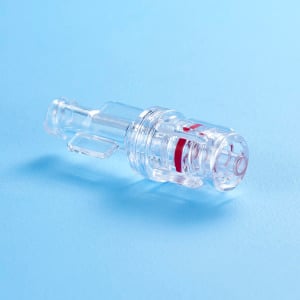
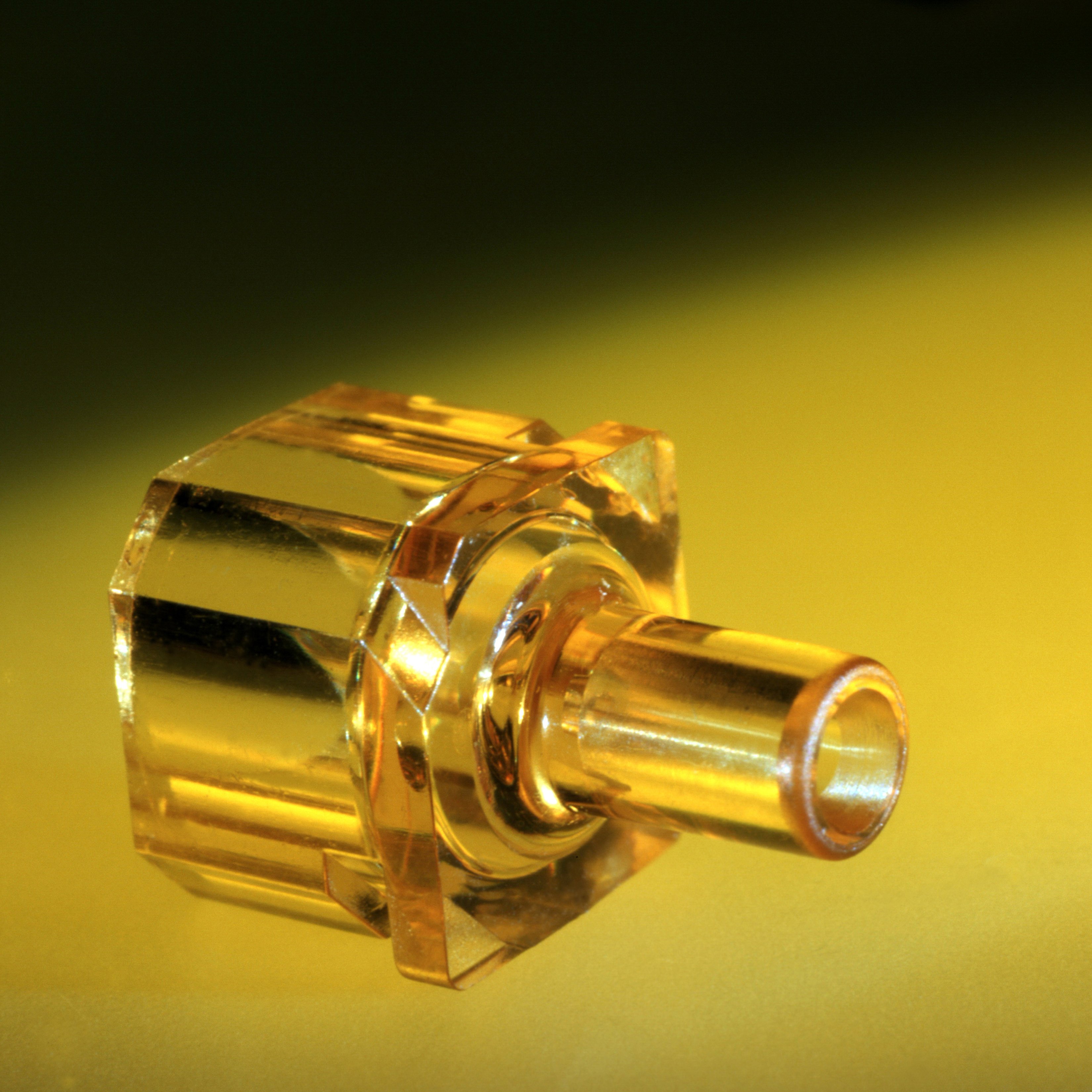
     This FREE webcast presentation will focus on the Biopharm market needs that resulted in designing a new line of unique single-use clamps that closely align with ASME-BPE specifications and significantly improve operators' ease of use and time spent on assembly. We incorporated input received from process designers and engineering into this innovative tri-clamp design. The presentation will also look at an ongoing problem identified by one of the largest consumers of bag ports, and confirmed by multiple other manufactures of bags, that they were seeing cracking issues due to contact with IPA while under stress. This problem was found in all LDPE products tested. The cracking appeared anywhere within 7 seconds to 2 minutes and spread through the entire surface of the port. I will discuss how we addressed this issue, and then review testing results surrounding the new design features that allow bags to drain 17 to 24 percent faster and with improved flow characteristics. This distinctive design is pending being patented. Value Plastics worked with a leading resin manufacturer to come up with an exclusive resin that overcomes the stressing cracking issue, is UPS Class VI certified and Animal Derivative Free while heat sealing to existing polyethylene films used in Single-use bags. Available On Demand

    Mon, Jan 23, 2012 - 12:00 pm

    30 minutes

  • Cleaning Validations of Reusable Medical Devices

    This on-demand webinar is designed to provide information for the beginner and the intermediate level person seeking further details into performing cleaning validations of reusable medical devices. The webinar covers the fundamentals of the cleaning process and goes into more depth about how to contaminate and perform the dwell time of the devices, what methods are used to clean the devices, what residuals are appropriate to test for specific device types, evaluating the recommended cleaning procedure for a reusable device according to AAMI TIR12:2010 and AAMI TIR30:2003, and the acceptance criteria for each residual tested. This information is needed to assure that once the device has been used, it can be properly cleaned. It is the responsibility of the manufacturer to apply this data, along with their own functionality and sterilization data, to the label claims. Lastly the topic covers several of the standards along with case studies and examples.

    Wed, Jan 4, 2012 - 11:32 am

    60 Minutes

  • Did Your Medical Device Just Contract A Virus?

     Today, technology advances are enabling a whole new class of intelligent, programmable, and even internet connected and enabled medical devices. Such new devices range from implantable pacemakers and insulin pumps to next generation networked imaging and diagnostics equipment. While these new high-tech enabled devices are creating significant advances in patient care and health care, what good are these devices if they aren't secure? Many device manufactures have taken precautions to ensure their devices are not tampered with and don't get infected. Yet, device manufacturers' core business is all about developing great new medical devices—they aren't in the business of knowing the most recent viruses spreading through the internet or internal corporate networks.In this webinar, learn how to:Make your devices more safe and securePrevent users from making unauthorized changes to your deviceMake your devices more easy for hospitals and healthcare providers to monitor, manage and maintain compliance with various state and federal regulationsHelp ensure your devices avoid malware infections that can create unforeseen support calls, warranty returns, and technicians going onsite to make repairs Date: December 13, 2011 Time: 2 PM ET/11 AM PT Duration: 60 minutes

    Tue, Dec 13, 2011 - 02:00 pm

    60 Minutes

  • PLM and the Patient

     Developing Breakthrough Technologies in the Medical Device IndustryPLM: One Single Source of Truth to Make Safe, Compliant and Effective ProductsUncertainty in FDA regulations, expiring patents, industry consolidation and organizational complexity have one thing in common – the potential to change a life sciences company.During this event, chief editor, Heather Thompson will highlight recent trends in MedTech innovation and facilitate discussion on how one of the leading healthcare companies in the world, Johnson & Johnson – Medical Device & Diagnostics, is leveraging Product Lifecycle Management (PLM) solutions to develop breakthrough products, streamline regulatory reporting and deliver process transparency in their product development and quality assurance processes.  Featured during this discussion will be Steve McCarthy, Vice President Quality Management Systems - Medical Devices & Diagnostics, Johnson & Johnson.In addition, you’ll hear from Jean Colombel, Vice President, Life Sciences Industry Strategy, Dassault Systemes, the latest in 3D PLM collaborative solutions for Life Sciences and how its technology allows you to put patients at the heart of your company’s strategy; experience your product in a 3D virtual environment to simulate product behavior and improve patient outcomes; and engage with regulators and customers to develop the most effective products possible.Key Learning Objectives•   Understand industry challenges and limitations of current approaches•   Understand how a lifecycle management approach merges the product and the process from conception to commercialization•   Learn pragmatic ways to get started implementing PLM strategies•   Discuss the urgency for improved safety and maximized profits while complying with increasing regulatory 

    Tue, Dec 13, 2011 - 10:00 am

    60 minutes

  • Don't Let Your IP get Ripped-Off in China

    Join Knobbe Martens Olson & Bear LLP Partner, Jerry L. Hefner, Ph.D., J.D., for a discussion around this hot topic and learn how to protect your technology. Until recently, it was commonly believed that there was little value in obtaining IP rights in China. The expense of obtaining and maintaining patents and patent applications in China combined with the lack of an effective means for enforcement, made Chinese IP generally an unattractive investment. Over the last decade, however, China has made significant advancements in providing applicants with reasonably cost effective means for both securing and enforcing IP rights. In view of China's new found wealth and glut of well-trained scientists and engineers, any innovator would be remiss not to include China as part of its IP strategy. In this seminar you will learn the types of IP protection that the Chinese system has to offer as well as cost effective approaches that non-Chinese entities can employ to reduce the likelihood of unauthorized exploitation of their technologies in China. In addition, you will learn how to control infringing activities through enforcement actions as well as realistic expectations for enforcement outcomes in China. Date: December 6, 2011 Time: 2 PM ET/11 AM PT Cost: $249.00 Group rates are also available. Contact Sue Johnson for information: sue.johnson@ubm.com, (303)254-4763.

    Tue, Dec 6, 2011 - 02:00 pm

    60 Minutes

  • Radiation Sterilization Validations

    This topic is designed to provide information for the beginner and the intermediate level person seeking further details into the Radiation sterilization process. The training starts with the fundamentals of testing involved in radiation validations including the necessary key terms and definitions and an overview of bioburden and sterility testing. The training then describes the common validation approaches The different types of methods for doing radiation sterilization including VD Max, Method 1 and Method 2 are discussed in detail. Lastly the topic covers several other key concepts involved with radiation sterilization.

    Mon, Dec 5, 2011 (All day)

    60 Minutes